Berberine Not Working for Your Blood Sugar? What a New Trial Quietly Points To
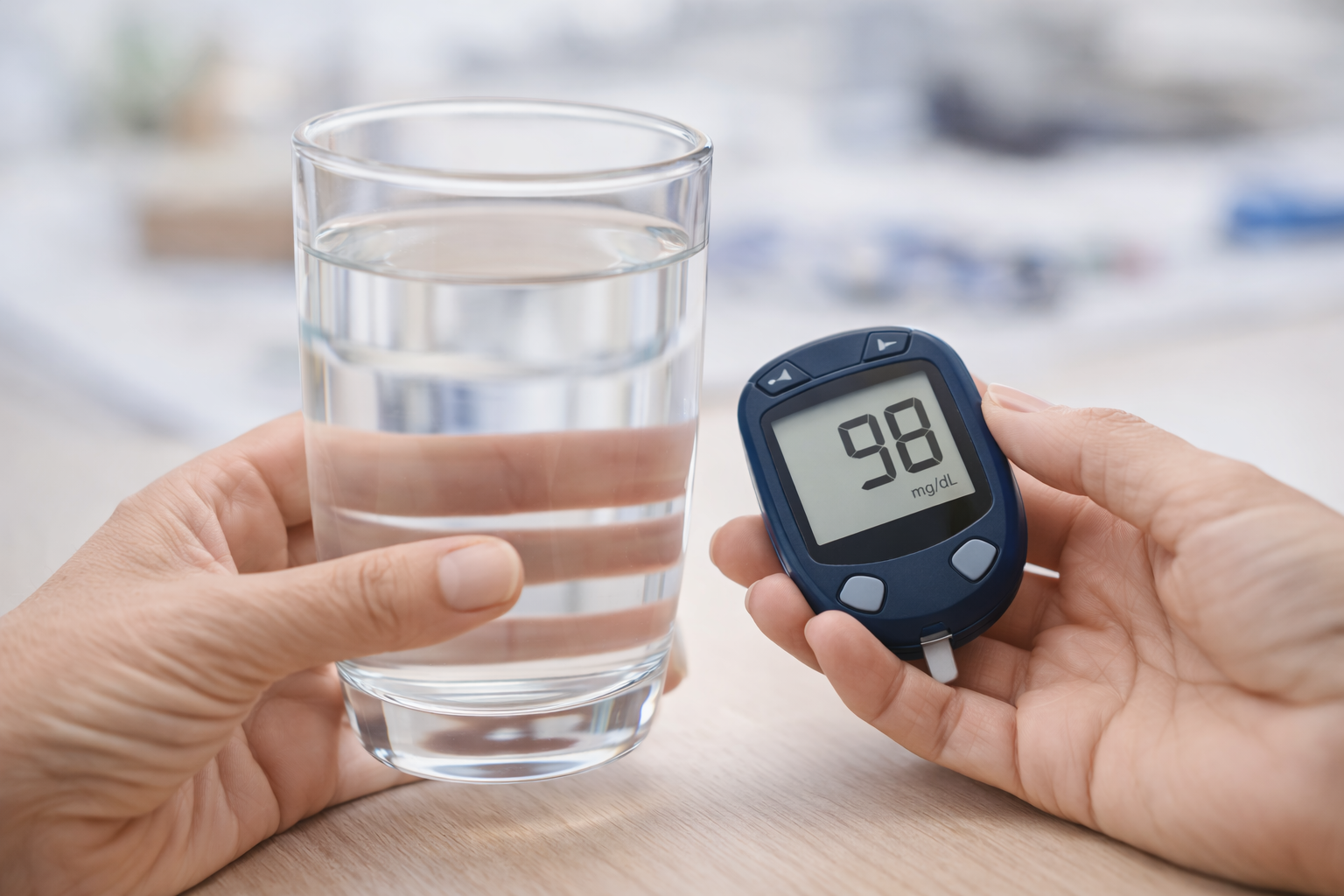
If berberine is not working for your blood sugar, the capsule may not be the whole story. Berberine on its own is poorly absorbed; a review published October 6, 2026 calls its oral bioavailability "low," which means much of what you swallow never reaches your bloodstream. And the newest trial that showed a real change in insulin sensitivity, published August 27, 2026, did not test berberine alone. It tested berberine working alongside other plant and mineral ingredients, every day, for 12 weeks.
You bought the bottle after the third video in a week called it "nature's Ozempic." You took it before meals, the way everyone said. Six weeks later the meter shows the same numbers it showed before, and your stomach has not felt right since the first week.
If you are searching berberine not working for blood sugar, you are not alone and you did not do it wrong. Berberine is one of the most talked-about blood sugar supplements of the year, and one of the most quietly abandoned. Most articles stop at "it has research behind it." Very few explain why so many people take it faithfully and see nothing move.
Does this sound like you?
- You have taken berberine for a month or more and your readings look about the same
- The full dose upset your stomach, so you cut back, and then nothing happened at all
- You switched to gummies or a "better" brand and still could not see it on the meter
- Your doctor called it prediabetes, or a "number to watch," and you wanted to act before it became more
- You are starting to wonder if supplements simply do not work for you
If two or more of those fit, keep reading. The problem may not be you, and it may not be berberine itself. It may be that berberine was asked to do a job alone.
Why berberine earned the attention
Berberine is a real compound, a yellow alkaloid found in plants such as goldenseal and Chinese goldthread, and it has been studied for blood sugar for years. A review published this month in The American Journal of Chinese Medicine (October 6, 2026) describes it acting on several fronts at once: how your cells respond to insulin, how much sugar your liver releases, even the bacteria in your gut.
That same review ends with a sentence that rarely makes it into the videos: berberine is "a promising candidate for complementary therapy, although the supporting clinical evidence remains limited." Promising, not finished. And the review spends pages on one stubborn problem.
Three reasons the capsule alone often stalls
1. Most of it never gets in. Berberine is notoriously hard for the body to absorb. Researchers have spent years trying nanocarriers, lipid coatings and absorption enhancers to push more of it into the bloodstream, and the October review notes that clinical results from those efforts are still limited. Swallowing more does not fix a door that only opens a crack.
2. The dose you can live with is lower than the dose in the studies. Trials commonly use around 1,000 to 1,500 mg a day, split across meals. That is exactly the range where many people get cramping, bloating or constipation. So they cut back to one capsule, and one capsule of a poorly absorbed compound is a very small push.
3. Blood sugar has more than one lever. How fast sugar arrives from a meal. How well your cells answer insulin when it knocks. How much sugar your liver adds on its own. How steady your appetite is between meals. A single ingredient, even a good one, leans on some of those levers and leaves the others alone.
Berberine may not be failing you. It may simply be outnumbered.
What the August trial actually tested
On August 27, 2026, the journal Nutrients published a randomized, double-blind, placebo-controlled trial from Greece. Ninety-three adults with obesity, and no diagnosed chronic disease, took either a placebo or a fixed combination twice a day before their main meals for 12 weeks. The combination was berberine plus white mulberry leaf extract plus chromium picolinate.
By the end, insulin sensitivity, measured with a glucose tolerance test, had improved 28% more in the combination group than in the placebo group. The same group also lost more body fat and more of the visceral fat that sits around the organs.
Here is the line most headlines skipped. The authors wrote that because the trial had no single-ingredient arms, "individual component contributions and synergy remain undetermined." In plain words: the researchers did not bet on one plant. They built a team, and the team is what moved.
It is one study, in people with obesity rather than diagnosed diabetes, and it needs confirming. But it fits what readers keep telling us. The people who finally see their numbers settle are rarely the ones who doubled their berberine. They are the ones who stopped asking one ingredient to carry the whole load.
What readers tried first, and why it only went so far
- A higher berberine dose. It may help some people. For many, the stomach decides first.
- Gummies instead of capsules. Easier to take, but many contain less berberine than the label suggests, and they add sugar to a sugar problem.
- A cinnamon capsule from the pharmacy. Some readers feel it helps a little. Most could not find it on the meter.
- Apple cider vinegar before meals. It may soften one meal's rise. It does little for the rest of the day.
- Cutting carbs even harder. It works on the arriving sugar. It cannot make cells answer insulin better on its own, and it is hard to keep up for years.
Every one of these can work on one lever. That is exactly the pattern of the person in the next story.
Carol's three bottles
Carol is 62, a retired school librarian in Knoxville, Tennessee. Her A1C came back at the top of the prediabetes range at her spring checkup, and her doctor said the words she had been dreading: "This is the one to watch."
She did not wait. Her neighbor sent her a video about berberine, and that weekend Carol bought a big bottle of 500 mg capsules at the warehouse store and took one before every meal. By day ten she had cramps most afternoons. She cut down to one capsule a day. Three months later her home readings looked like they had in March, and she had spent the summer, in her words, "with a stomach that felt like it was mad at me."
She tried the gummies next. Then a cinnamon capsule. Her daughter-in-law finally said what everyone at the table was thinking: "You're throwing money at a fad, Carol." The worst part, Carol told us, was that she half agreed. "I was doing everything I was supposed to do, and the only thing that changed was how much I spent."
The turn came at her book club in late August. Her friend Joyce, 66, a retired nurse and the most skeptical woman Carol knows, had been fighting her own creeping numbers for two years. When Carol mentioned giving up on berberine, Joyce reached into her bag and set a white bottle with a red label next to Carol's plate.
Carol's first reaction was a groan. "If that's more berberine, I'm done." She picked it up to prove her point and turned it around to read the side.
Berberine was there. So was gymnema, a plant long used for sugar cravings. A bean extract. A leaf extract. Cocoa. Turmeric. Carol read it twice. "It wasn't berberine on its own," she told us. "It was berberine with company. That was the exact thing that trial had been about."
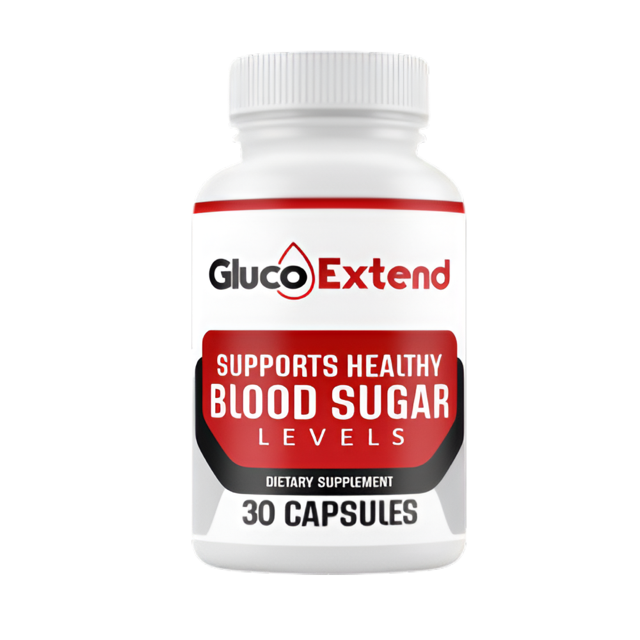
The bottle was Gluco Extend.
What made Carol take it seriously was not the label. It was Joyce. Joyce spent thirty years reading medication labels for a living and does not buy anything she cannot explain. "I didn't start it for the hype," Joyce said. "I started it because it wasn't one plant being asked to do everything, and because it was one capsule with water instead of three that wrecked my afternoon."
Carol still did it her way. She wrote the name down, looked up the company's page that night, and read every line. The thing that tipped her was the guarantee: 180 days, money back, return whatever you have not used. "Six months is two A1C checks," she said. "If my doctor couldn't see it, I'd be out nothing but a little time."
What Carol saw, and how long it took
- Week 1. Nothing she could see on the meter. What she did notice was what was missing: no cramps, no afternoon spent close to the bathroom. For the first time all summer she took something every day without dreading it.
- Weeks 2 and 3. Her readings after lunch looked a little calmer, not every day, but more days than not. The 3 p.m. pull toward the cookie jar got quieter, and she noticed she was not reaching for coffee at four just to get through to dinner.
- Month 1. Her after-meal readings were settling into a narrower range. She stopped checking ten times a day because the numbers had stopped surprising her.
- Months 2 and 3. At her follow-up, her doctor read the lab sheet, looked up, and said, "Whatever you've been doing since the spring, keep doing it." Her daughter-in-law asked for the name the following Sunday.
Why so slow? Because what decides your numbers over time, how well your cells answer insulin, changes over weeks, not days. The Greek trial ran 12 weeks for a reason. That is also why Carol's second order was the larger supply, and why the company itself recommends giving it three to six months. Individual results vary, and a single good week means little; three good months mean something.
Everything Carol wanted to know before she ordered
What it is
Gluco Extend is a capsule supplement, 30 capsules to a bottle, made in the USA. The company describes it as a proprietary blend of more than 11 plants and nutrients designed to support healthy blood sugar levels and metabolic function, and lists it as natural, non-GMO, gluten-free, stimulant-free and non-habit-forming. It is a supplement, not a medication, and it does not replace one.
Why it fits the berberine problem
Everything in this article comes back to one idea: berberine alone is easy to under-absorb and easy to give up on, and the most recent trial that moved insulin sensitivity used berberine as part of a team. Gluco Extend is not the formula from that trial, and no one should pretend it is. What it shares is the approach: berberine working alongside other plants instead of being asked to pull every lever by itself.
What is inside
- Berberine, the ingredient you already know, here as one part of the blend rather than the whole of it.
- Gymnema, which the company says helps maintain healthy blood sugar levels; it is the plant traditionally linked to quieting the sweet tooth Carol noticed fading.
- A leaf extract, which the company also lists for maintaining healthy blood sugar levels.
- Bean extract, listed by the company to support healthy blood sugar and metabolic function.
- Cocoa for antioxidant support and turmeric for healthy digestion, which matters if your stomach is the reason berberine did not last.
The company does not print the amount of each ingredient on its page, so do what Carol and Joyce did: read the panel on the bottle when it arrives, and show it to your pharmacist if you take any prescription.
How to take it
The company's instructions are simple: take it with water. A bottle is a 30-day supply. Carol takes hers with breakfast and keeps her meter readings in the same notebook she used during the berberine months, so she can compare honestly. She kept every prescription exactly as written.
Who it may suit, and who should not start it on their own
It may suit you if you gave berberine a fair try and saw little, if the full berberine dose was too hard on your stomach, or if your doctor told you your numbers are "the ones to watch" and you want to support healthy blood sugar alongside your current plan, not instead of it.
Talk to your doctor first if you take insulin, metformin, a sulfonylurea or any medication that lowers blood sugar, since berberine can add to their effect. The same goes if you are pregnant or nursing, under 18, or have a bowel condition such as IBS, Crohn's disease or ulcerative colitis. If your readings run well above target, or come with thirst, frequent urination or blurry vision, that is an appointment before it is a purchase. Never change a medication without medical supervision.
The guarantee
The company's page shows a 180-day, 100% money-back guarantee: if you are not satisfied, return what you have not used for a full refund. It also states that the order is a one-time payment with no automatic shipments. That is the window Carol gave herself: two A1C checks, and her money back if the lab sheet said no.
You don't need a stronger berberine. You may need one that isn't working alone.
See the blend Joyce set by Carol's plateIf you already spent a summer on a bottle that did nothing but upset your stomach, the fair test is the one the researchers ran: every day, for at least 12 weeks, with something you can actually keep taking. Most readers who go ahead choose the three- or six-month supply for the same reason Carol reordered it. Stopping halfway tells you nothing.
Give it the 12 weeks the trial gave its team, with 180 days to change your mind.
Start your own 12-week testP.S. Carol still has that warehouse-store bottle of berberine. It is in the back of a cabinet, two-thirds full. If yours is sitting next to a meter that has not moved since you opened it, look at what was in Joyce's bag.
Further Reading
Berberine Not Working for Your Blood Sugar? What a New Trial Quietly Points To
The 3 a.m. answer most advice leaves out
Walking After Meals but Blood Sugar Still High?
What the 15-30% number leaves out
Sources: Xenos K, et al. Effects of Berberine, White Mulberry Leaf Extract and Chromium Picolinate on Body Composition and Insulin Resistance in Adults with Obesity: A Randomized Controlled Trial. Nutrients, 2026 Aug 27;18(17):2801. Liao Y, et al. The Therapeutic Potential of Berberine in Treating Diabetes and Its Complications: Molecular Mechanisms and Future Perspectives. The American Journal of Chinese Medicine, published online October 6, 2026.
Medical Disclaimer: This article is for informational purposes only and does not constitute medical advice. Reader accounts are individual experiences; results vary. Statements about supplements have not been evaluated by the Food and Drug Administration, and supplements are not intended to diagnose, treat, cure or prevent any disease. Consult your healthcare provider before starting any supplement, especially if you take medication for blood sugar.